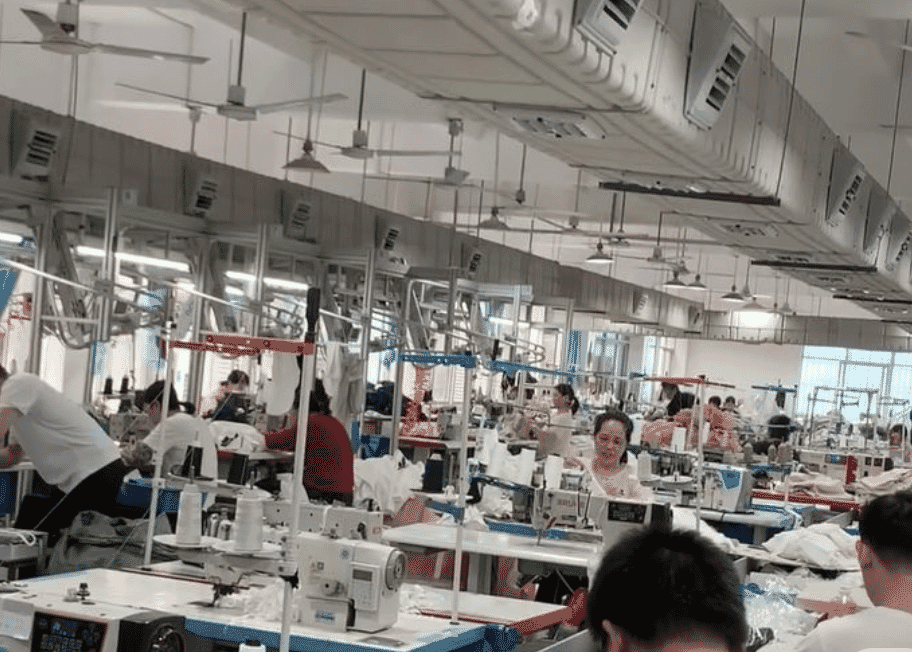
A China sourcing agent finds factories on your behalf and takes a fee for it. The model is legitimate and sometimes the right answer. The problem is how most of them are paid, because a percentage of your order value is a percentage that grows when your costs grow.
This is not an argument that agents are bad. It is an argument that you should know which fee model you have agreed to before the first quote arrives, because the model determines whose side the incentives sit on.
China exported $165.24bn of apparel in 2024 (Sheng Lu, FASH455, citing WTO data, 2025). Several layers of intermediary sit between most of that output and the brands buying it, and almost none of them are visible in a quote.
Note: China Clothing Manufacturer is a group of documented clothing factories in China, producing for brands from 100 units. Ranges in this guide come from published industry sources and are given as market ranges, not as quotes from a specific factory. Ranges come from published industry sources. We confirm exact MOQ and price with the factory when you send a brief.
Key takeaways
- Three fee models exist: commission, flat fee and retainer. Only one of them grows when your unit cost grows.
- A commission-paid agent has no structural reason to push your price down. That is not dishonesty, it is arithmetic.
- Agents genuinely help with language, on-the-ground inspection, consolidation and chasing. Those are real services.
- Ask who invoices you, who invoices the factory, and whether the agent takes anything from the factory side.
- A "free" agent is paid by the factory, which means the factory has priced them into your quote.
- Working direct removes a layer but transfers its work to you. Decide who does it before you decide whether to pay for it.
What Does a China Sourcing Agent Actually Do?
The service bundle is usually the same across the market, even when the fee model is not. Understanding which parts you need is how you work out what the service is worth to you, because most brands are paying for four things and using two. The bundle is rarely itemised, which is what makes it difficult to price against doing the work yourself.
Finding and shortlisting factories. The genuine value here is negative screening: knowing which factories to rule out. Anyone can produce a list of suppliers. Knowing which one failed a client last season is the part you cannot do from a browser.
Language and time-zone coverage. Someone in the same country as your factory, working the same hours, chasing the same sample. This is the most undervalued part of the bundle.
Inspection and quality gates. Attending pre-production, walking the line mid-run, checking the shipment before it leaves. Done properly, this is worth more than the sourcing.
Consolidation and logistics. Combining goods from several factories into one shipment, handling documentation.
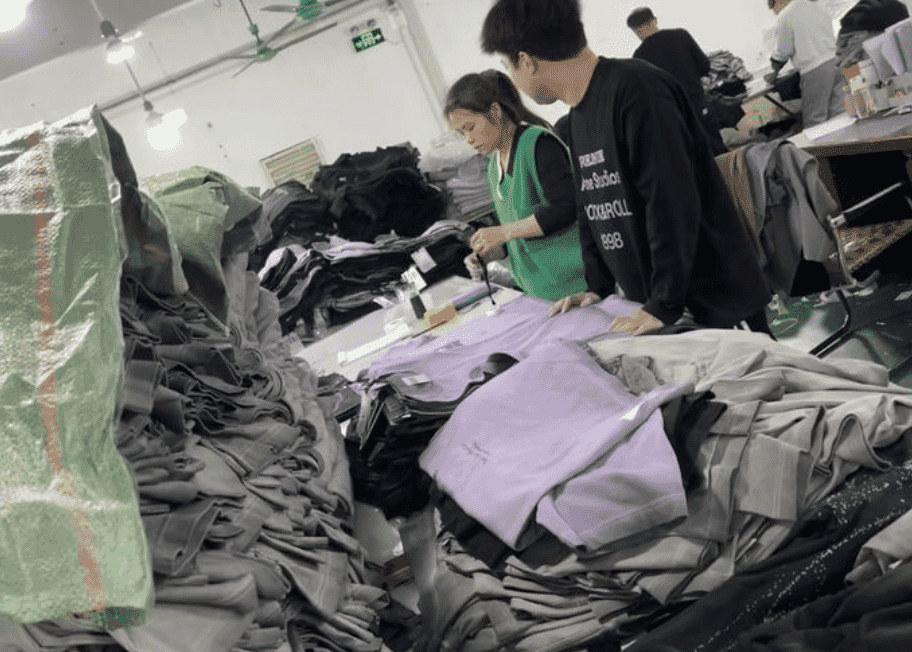
Citation Capsule: A China sourcing agent typically bundles four services: factory shortlisting, language and time-zone coverage, inspection at production milestones, and shipment consolidation. The screening value lies in knowing which factories to exclude rather than which to include, and the inspection component is frequently worth more to a brand than the sourcing itself.
The related distinction, between an agent acting for you and a trading company selling to you, is covered in our guide to telling a clothing vendor from a factory in China.
How Are Sourcing Agents Paid, and Why Does It Matter?
Four models cover almost the whole market, and the difference between them is not the amount. It is the direction the incentive points. One pays the agent more when your unit price goes up, two pay the same whatever you are quoted, and one is paid by the factory, which makes you not the client. That single structural fact explains most of what brands experience as an agent being unhelpful on price.
| Model | How it works | Where the incentive points |
|---|---|---|
| Commission | A percentage of order value, typically charged on the invoice total | Upward. A higher unit price pays the agent more |
| Flat fee | A fixed amount per style or per order, agreed in advance | Neutral. The fee is the same whatever you pay the factory |
| Retainer | A monthly service fee for ongoing coordination | Neutral, and aligned with keeping you as a client |
| Factory-side | Free to you. The factory pays the agent | Toward the factory. You are not the client |
Ranges and structures come from published industry sources. Always confirm the fee model in writing before work begins.
The structural point is simple. If your agent earns 5% and negotiates your unit cost down by 10%, they have just cut their own fee. Good agents do it anyway. The model still asks them not to.
Citation Capsule: China sourcing agents are paid by commission on order value, a flat fee per style or order, a monthly retainer, or by the factory itself. Commission is the only model where the agent's income rises with the brand's unit cost, which means a successful price negotiation reduces the agent's own fee. A no-cost agent is paid from the factory side and has priced that into the quote.
Skip the search: the China factory directory ($39) lists documented factories by category, city and capability, with the verification status of each. One-time payment, instant download.
When Is a Sourcing Agent Worth Paying For?
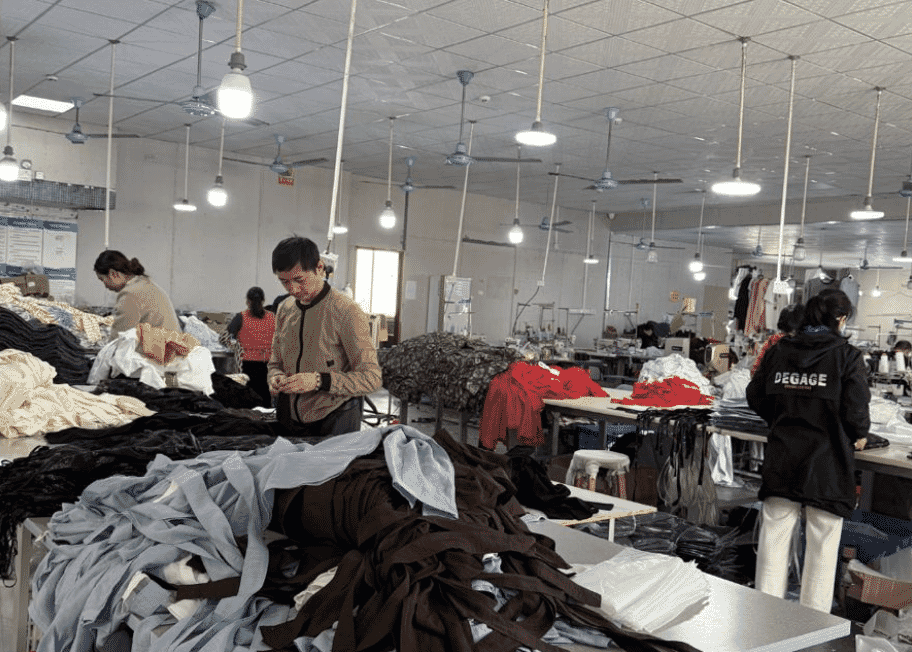
Four situations where the answer is clearly yes, and they have something in common: each one is a case where the work genuinely has to be done by somebody in the same time zone as the factory. Where that is not true, you are usually paying for coordination you could do yourself.
You are buying from many factories at once. Consolidation, one point of contact and one shipment is real work that someone has to do.
Your category is unfamiliar and technical. Somebody who already knows which factories can bond a seam or run a seamless machine saves you a season of learning it.
You cannot travel. Inspection by video is better than nothing and much worse than a person on the floor.
The order is large enough that a failure is existential. At that size, paying for a second pair of eyes is cheap insurance.
If the answer is that you would rather do the work yourself, the full sequence is in our guide to how to find clothing manufacturers in China.
The official advice points the same way. The International Trade Administration recommends that firms entering China consider a regional approach, partnering with agents, distributors or representatives who specialise in a specific region, noting that tier-one cities offer sophisticated business environments alongside heightened competition. An agent is a legitimate structure. What matters is which way their incentive points, which is the section above.
What Should You Ask Before Signing With an Agent?
Five questions, and the hesitation tells you as much as the answer. None of them is adversarial and all of them are things a well-run agency answers immediately, because the answers are simply how their business works. An evasive response to any one of them is the finding.
- How are you paid, exactly? Percentage, flat, retainer, or from the factory side. Get it in writing.
- Do you receive anything from the factory? Rebates and referral fees are common and rarely volunteered.
- Who invoices me, and who invoices the factory? If the agent invoices you for the goods, you are buying from a trading company, not using an agent.
- Will you give me the factory's name and business licence? An agent who will not is selling you opacity as a service.
- What happens if the shipment is wrong? Ask who carries the cost. The honest answer is usually "we help you argue with the factory", and that is worth knowing in advance.
What Should Be in the Agreement Before Work Starts?
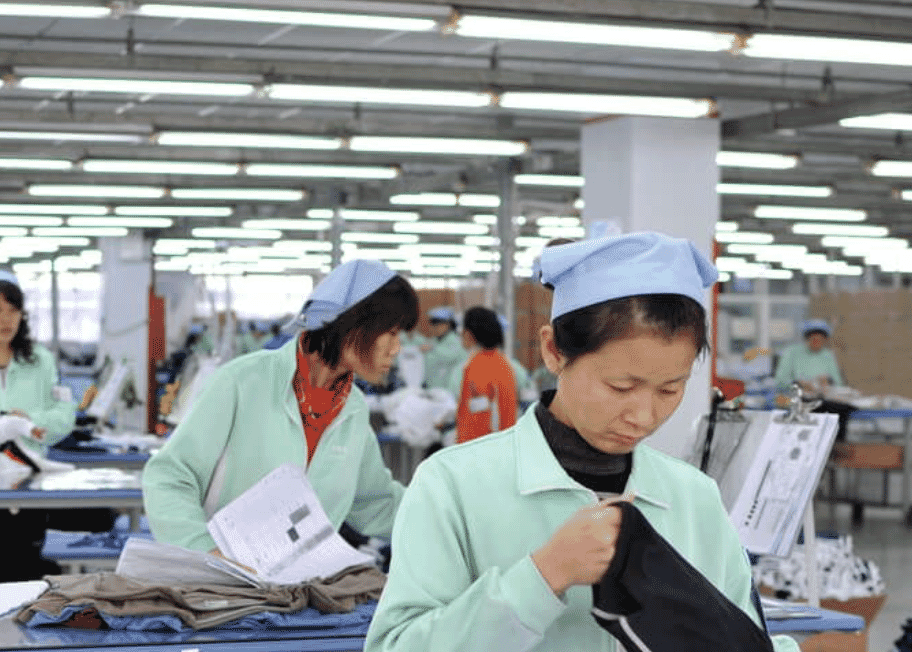
Most sourcing arrangements in this market run on an exchange of emails, and most of the disputes that follow are about things nobody wrote down. Six clauses prevent almost all of them, and none requires a lawyer to draft. They exist to make explicit the things both sides currently assume, which is where every dispute in this relationship originates.
| Clause | What it must say | Why it matters |
|---|---|---|
| Fee basis | Percentage, flat, or retainer, and what it is calculated on | Commission on FOB and commission on landed cost are different numbers |
| Factory-side income | Whether the agent receives anything from the factory | Rebates are common and rarely volunteered |
| Factory disclosure | That you are entitled to the factory name and licence | Without it, you cannot leave |
| Sample and defect liability | Who pays when a shipment fails inspection | Usually you, and you should know that in advance |
| Intellectual property | That your patterns and artwork remain yours | Patterns sit on a factory server otherwise |
| Termination | Notice period, and what happens to open orders | Decides whether leaving is possible mid-season |
Structural guidance, not legal advice. Have any agreement reviewed for your own jurisdiction.
The clause brands forget
Pattern ownership. Your graded pattern is the most valuable thing you develop, and if it was digitised by the factory at the agent's request, it is sitting on the factory's system with no document saying it is yours. Write it down before the first sample, not after the relationship sours.
The contractual position more broadly, including why a standard confidentiality agreement protects against the wrong risk, is covered in NNN agreements and supplier contracts in China.
Citation Capsule: Six contractual clauses prevent most sourcing-agent disputes: disclosure of the manufacturing factory, the fee basis in full including any payment received from suppliers, ownership of patterns and specifications, inspection rights, notice periods, and what happens to tooling and samples when the relationship ends.
How Do You Move Away From an Agent?
The answer depends almost entirely on whether you know the factory's name, which is why disclosure belongs in the agreement rather than in a later negotiation. A brand that knows its manufacturing factory can move and keep its product. One that does not is starting development again from zero with a supplier it has never met.
If you know the factory, the move is administrative. Give notice, settle open orders, and approach the factory directly. Expect a price change: the agent's margin was inside the number you were quoted, and not all of it comes back to you.
If you do not know the factory, you are starting again. Your patterns may be on their system, your fit is proven on a machine you cannot identify, and the samples you approved came from a supplier you cannot name. That is the cost of opacity, paid in arrears.
Either way, move between seasons rather than mid-programme. Changing supplier with an order in production is how brands end up with neither the old relationship nor the new goods.
Citation Capsule: The ability to leave a China sourcing agent depends on whether the brand knows the manufacturing factory's name and business licence. With disclosure, transition is administrative and the main variable is how much of the agent's former margin the factory returns. Without it, the brand restarts sourcing, and its graded patterns may remain on a factory system it cannot identify.
What Does Working Direct With the Factory Change?
It removes the layer. It does not remove the work. Everything the agent was doing still has to happen, and the question is whether you do it, the factory does it, or nobody does. The third outcome is the common one and it is why some brands find that going direct costs them more in missed problems than the agent fee ever did.
What you gain is visibility: you see the factory's real price, you talk to the people running your order, and nothing sits between a problem and the person who can fix it. What you take on is the coordination, the time zone and the inspection.
That is the model we run, and it is worth being plain about the trade. We charge flat fees and we take nothing from the factory, so the factory bills you directly and our fee does not move when your unit cost does. It also means the coordination work is priced separately rather than hidden in a percentage, which some brands prefer and some do not.
Want to see the difference on your own numbers? Send a quote you have already received and we will show you what sits inside it. No cost, no obligation. Send the quote.
The inspection work is the part brands most often drop when they go direct: pre-shipment inspection, AQL and defect lists sets out what it involves and when it should happen.
What Are the Warning Signs Worth Walking Away From?
Six behaviours, and none of them require you to be an expert to spot. They are all about what the agent will and will not put in writing. That is the useful pattern: a reluctance to document something is almost always about an interest that documenting it would expose, and it takes no technical knowledge to notice.
Refusing to name the factory. Framed as protecting their relationships, it protects their margin. You are entitled to know who makes your goods, and a supplier chain you cannot see is one you cannot audit or leave.
Vagueness about the fee. "We take a small commission" is not a fee structure. If the basis is not written down, it is because the number is not fixed.
Quoting only DDP. A landed price bundles goods, freight and duty into one number and makes the factory price invisible. Ask for FOB at the named port and build the rest yourself.
Discouraging a factory visit. There are legitimate reasons a specific visit is inconvenient. There is no legitimate reason for a pattern of discouraging visits.
Sample and bulk from different sources. If the approved sample came from one place and the bulk from another, you did not approve the bulk. Ask, in writing, whether the sample was made in the same factory that will run production.
Pressure on the deposit. Urgency about a payment, especially to an account that does not match the licence, is the oldest signal there is.
Citation Capsule: Six warning signs distinguish an opaque sourcing arrangement: refusal to disclose the manufacturing factory, an unwritten fee basis, quoting exclusively on DDP terms that hide the factory price, a pattern of discouraging factory visits, samples produced in a different facility from bulk production, and urgency around deposits to accounts that do not match the business licence.
The adjacent fraud patterns, including payment redirection and certification claims without numbers, are set out in our guide to the scam patterns and how to avoid them.
When Is China the Wrong Answer Entirely?
Three cases, whichever model you use to get there. In each the obstacle is structural rather than a question of finding a better factory or a better agent, which means more searching will not solve it and recognising the situation early saves a season.
Small runs of complex garments. At 100 to 300 pieces of a constructed style, European nearshore production is often comparable once freight, duty and a failed sample round are counted.
Calendars measured in weeks. Sea freight and customs are a long clock, and no agent shortens it.
Duty-sensitive categories. Run the HTS classification and the Section 301 layers before the unit price. Confirm against the live USTR and CBP schedules.
Before you sign anything
- Get the fee basis in writing, and state what it is calculated on: FOB, ex-works or landed.
- Ask directly whether the agent receives a rebate, referral fee or commission from the factory.
- Secure the right to the factory name and business licence in the agreement, not afterwards.
- Write down who pays when a shipment fails inspection. The default answer is you.
- State that your patterns, gradings and artwork remain your property.
- Agree a notice period and what happens to orders already in production.
If an agent will not put these six in writing, that is the answer to whether you should work with them.
How we are paid, and what we do not take
- Flat fees, published, agreed before any work begins.
- No commission on order value, so a lower unit price never reduces what we earn.
- Nothing from the factory side: no rebates, no referral fees, no volume kickbacks.
- The factory invoices you directly. We never sit between you and the production invoice.
- You get the factory name and business licence as a matter of course, not as a concession.
That structure is the whole reason we can tell you to negotiate harder without it costing us anything.
Where production is moving and what actually transfers is covered in our analysis of what China Plus One really moves.
Conclusion
The question is not whether to use a sourcing agent. It is which fee model you have agreed to, and whether you know what the agent receives from the other side of the table. Those two facts determine almost everything else about the relationship, and both are knowable before you sign anything.
A commission-paid agent can be excellent. A flat-fee arrangement removes a structural conflict that no amount of goodwill fully solves. And an agent who is free to you is being paid by the factory, which means you are paying for them without seeing the line.
Ask the five questions. Get the fee model in writing. And insist on the factory's name and business licence, whichever route you take.
We are a group of documented clothing factories in China, producing for brands from 100 units. Tell us the garment, the quantity and the fabric, and we route the brief to the factory in our group built for it, normally within 24 hours. You work directly with the factory. Flat fees, no factory commissions.
Get in contact Download the directory ($39)Need a tech pack? Get a factory-ready single-style tech pack for $79. See what's included.
Frequently Asked Questions
What does a China sourcing agent charge?
Fee models fall into four types: a commission on order value, a flat fee per style or order, a monthly retainer, or payment from the factory side at no visible cost to you. Get the model in writing before work begins, and ask specifically whether the agent receives anything from the factory.
Is it cheaper to work direct with a Chinese factory?
Working direct removes the intermediary margin but transfers the coordination, inspection and time-zone work to you. It is cheaper only if you or someone you pay actually does that work. The real gain is visibility: you see the factory's own price and speak to the people running your order.
What is the difference between a sourcing agent and a trading company?
An agent acts on your behalf for a fee and the factory invoices you. A trading company buys the goods and sells them to you, so it invoices you for the product itself. If the company you are paying issues the invoice for the garments, you are buying from a trading company.
Should I use a free sourcing agent?
A free agent is paid by the factory, usually through a rebate or referral fee priced into your quote. You are still paying, you just cannot see the line. That is not automatically disqualifying, but you should know it before you treat their factory recommendation as neutral advice.
How do I verify the factory behind an agent?
Ask for the factory name and business licence, and check that the unified social credit code matches the registered name. An agent who refuses to name the factory is selling opacity. Verify certification claims by certificate number in the issuing body's own database, never from a logo.
Editorial note: all company names, certification marks and trademarks referenced here are the property of their respective owners. MOQ, cost and lead-time figures are market ranges compiled from the published sources listed below, not quotes from any individual factory, and they vary by product, fabric and season. Tariff figures were correct at the date of publication and the 2026 position is still moving. Always verify your own HTS classification and confirm terms directly with the factory before committing.
Sources
- International Trade Administration, US Department of Commerce: China Country Commercial Guide: market entry strategy and evaluating local partners.
- Sheng Lu, FASH455, University of Delaware (2025): WTO-based analysis of global textile and apparel trade.
- China National Garment Association, Industry Overview: provincial concentration of garment output and the national cluster map.
- OEKO-TEX Label Check: public verification of certificate numbers.
- amfori BSCI: social audit system documentation.
- Office of the United States Trade Representative: Section 301 tariff actions and exclusion process.
- US Customs and Border Protection: trade remedies and duty administration.
- China Import and Export Fair (Canton Fair): official fair information and phase structure.
Related Reading
No commissions. No markups. The factory bills you directly.
